A.I. Why Nano Banana Might Be Lumion’s Real Competition

Topics relating to AI (Artifical Intelligenc)e use in Lumion and assiting with the output result of Lumion.

tnarch

Member
Feb 20, 2020
34
46
I personally think Lumion’s biggest competition isn’t D5 Render or Twinmotion — it’s AI, especially Nano Banana. I recently tested it for work, and even though it’s still new, it has a lot of potential. It doesn’t just save time; it also makes rendering accessible to everyone. You can generate images using prompts without spending hours learning complex rendering software or needing advanced skills.

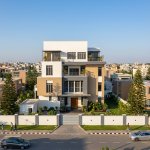
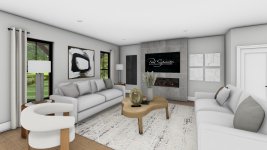
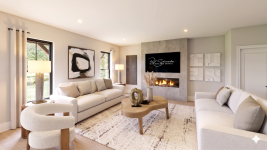
The image is based on a SketchUp model — the first one was rendered in Lumion, and the second in Nano Banana.

Lumion.jpg


AI.jpg
 
Hmmm im my opinion no. AI still not consistent in terms o materials and geometry. Ai is good to crete context and improve details of your render. But the base of the rendering still need to be done. Also some elemetns of AI specially far way from camera, is very very fake. Today i have using AI to create references, impove details, upscale renders, creating specifc models and create context.
For exemple, in your render, if your client ask you to change the angle, probably ai will create another city behinh, another buildings.
 
Upvote 0
My issue with AI generation/enhancement has always been the plants, and linear pavers. It messes up linear paver lines, and turns plants into entirely different species. Hoping the next few years give us more improvements in those areas. Until they can figure that out, I'm not worried about AI taking our jobs :)
 
Upvote 0
Hmmm im my opinion no. AI still not consistent in terms o materials and geometry. Ai is good to crete context and improve details of your render. But the base of the rendering still need to be done. Also some elemetns of AI specially far way from camera, is very very fake. Today i have using AI to create references, impove details, upscale renders, creating specifc models and create context.
For exemple, in your render, if your client ask you to change the angle, probably ai will create another city behinh, another buildings.
Most AI tools still struggle with consistency — materials, geometry, and especially keeping the same environment when you change camera angles. But Nano Banana is different from tools like Midjourney or DALL·E. It’s not just generating images; the Pro model is already showing early signs of maintaining actual scene coherence instead of reinventing everything each time.

It’s not ready to replace a full 3D rendering pipeline when a client needs precise, repeatable views. But it is already strong at early visualizations, context creation, mood studies, and rapid refinements — which are areas many people rely on Lumion for today.

So I don’t see Nano Banana as a replacement for Lumion right now, but definitely as a clear sign of where the competition is heading.
 
Last edited:
Upvote 0
My issue with AI generation/enhancement has always been the plants, and linear pavers. It messes up linear paver lines, and turns plants into entirely different species. Hoping the next few years give us more improvements in those areas. Until they can figure that out, I'm not worried about AI taking our jobs :)
Newer models like Nano Banana Pro are already getting noticeably better at preserving linear patterns and object identity compared to older tools like Midjourney or DALL·E. I’ve been using the Pro model in Photoshop, and the results — plus the control you get — are much better than the web-based version.
 
Last edited:
  • Like
Reactions: AlanFrijns
Upvote 0
Currently tried some renders with Lumion, and tried the same with Nano banana using a very detailed and specific prompt, and I have to admit I'm adopting it for quick design studies. The prompt was constrained to change absolutely no aspect of the design, or camera angle. Yeah, there's room for improvement especially with design adherence and accuracy, but it's a start. Lumion with an effective inbuilt ai overlap would be great. PS: I'm not trying to win any awards with the renders. It's just a typical day at the office and the client wants to see what the project looks like.
add_natural_urban_street_activity_to_this_photograph_while_preserving_the_existing_camera_posi...jpg
WhatsApp Image 2025-12-03 at 8.56.30 PM.jpeg
WhatsApp Image 2025-12-03 at 8.58.41 PM (1).jpeg
WhatsApp Image 2025-12-28 at 7.47.24 AM.jpeg
index.php
 

Attachments

  • transform_the_source_sketchup_image_into_a_real_on-site_architectural_photograph_of_the_exact_...jpg
    transform_the_source_sketchup_image_into_a_real_on-site_architectural_photograph_of_the_exact_...jpg
    719.3 KB · Views: 16
Last edited:
  • Like
Reactions: tnarch
Upvote 0
個人的には、Lumionの最大のライバルはD5 RenderやTwinmotionではなく、AI、特にNano Bananaだと考えています。最近仕事で試してみましたが、まだ新しいツールですが、大きな可能性を秘めています。時間の節約になるだけでなく、誰でもレンダリングを使えるようになります。複雑なレンダリングソフトを何時間もかけて習得したり、高度なスキルを必要とせずに、プロンプトを使って画像を生成できます。

この画像は SketchUp モデルに基づいています。最初の画像は Lumion でレンダリングされ、2 番目の画像は Nano Banana でレンダリングされました。

AIの進歩、普及により自分達の仕事が無くなりそうで恐怖を感じます。AIと勝負しても絶対に勝てませんから。AIとルミオンを上手く取り入れて自分の形を作って行くしか無いんですが・・・。先方に生成AIでなんとなくパース作れるからと言われたら何も言い返せません。

Admin: Google Translate:

Personally, I believe Lumion's biggest competitor isn't D5 Render or Twinmotion, but AI, specifically Nano Banana. I tried it out recently at work, and while it's still a new tool, it has great potential. Not only does it save time, it also makes rendering accessible to everyone. You can generate images using prompts without spending hours learning complex rendering software or requiring advanced skills.

This image is based on a SketchUp model. The first image was rendered in Lumion, and the second image was rendered in Nano Banana.

..

I'm terrified that the advancement and widespread use of AI will put us out of business. You can't win against AI. The only way to create your own work is to effectively incorporate AI and Lumion. But when someone tells me they can create perspectives using generative AI, I have no way of arguing.
 
Last edited by a moderator:
  • Like
Reactions: tnarch
Upvote 0
This thread deserves more attention than it has gotten. I have been getting 'superior' results with the AI engines out there off rough raster Lumion inputs. I don't fool around with lighting, textures or any of that as the new AIs handle all of it. Plus the time saving! It only take 30-40 second to get a high quality render vs 15-20 minutes with a Lumion fully-stacked RT image and the results better. Such a time and money saver as now I won't bother wasting 3-4K on a new 5090 card every year, I will probably still keep using Lumion as it is easy and fast to design with but as a render program, I am sticking with AI engines that are only going to get better and better!

Love to hear what others are thinking and experiencing!
Appreciate you bringing this up. The speed gains you’re describing are hard to ignore, especially when AI can take a rough render and elevate it in seconds. I’m also curious how far people are pushing hybrid workflows these days. Things definitely feel like they’re shifting quickly.

Do you have any renderings you can share? I’d love to see them.
 
Upvote 0
Admin: Google Translate:


I'm terrified that the advancement and widespread use of AI will put us out of business. You can't win against AI. The only way to create your own work is to effectively incorporate AI and Lumion. But when someone tells me they can create perspectives using generative AI, I have no way of arguing.
Hi Irumi - I totally understand that feeling — it’s a weird moment in the industry. But I don’t think it’s about arguing against AI or trying to “beat” it. It’s more about shifting how we work with it. AI can generate images fast, but it doesn’t replace the thinking behind the design. I think the role is moving toward directing and refining rather than purely producing.
 
Upvote 0
Appreciate you bringing this up. The speed gains you’re describing are hard to ignore, especially when AI can take a rough render and elevate it in seconds. I’m also curious how far people are pushing hybrid workflows these days. Things definitely feel like they’re shifting quickly.

Do you have any renderings you can share? I’d love to see them.
SketchUp: (About 4 hours to build model)
SKP_17_Pic03.PNG


Lumion 2025: (About 30 minutes prepping the SketchUp model, then a little over 2 hours in Lumion, then ~30 minutes render time for 3 hours total)
Lumion_Pro_Pic03.jpg

Nano Banana: (15 minutes SKP prep, 5 minutes in NanaBanana for 20 minutes total)
SKP_AI_Pic03.jpg


The future is now...
 
Upvote 0
I have been taking simple raster output from Lumion and making high-res images with Gemini. Getting great results in a fraction of the time, even making minor adjustments with prompting. For me, the lighting can't be matched by the effort it takes to place spotlights and realistic lighting stacks in Lumion. Not to mention the fact it would take 15 minutes to see the results of all that work (vs 20 second in Nano)
 

Attachments

  • SELECTION.jpg
    SELECTION.jpg
    1.5 MB · Views: 14
  • Gemini_Generated_Image_7lfusl7lfusl7lfu.png
    Gemini_Generated_Image_7lfusl7lfusl7lfu.png
    5.5 MB · Views: 15
Upvote 0
  • Like
Reactions: Niah
Upvote 0
I have been taking simple raster output from Lumion and making high-res images with Gemini. Getting great results in a fraction of the time, even making minor adjustments with prompting. For me, the lighting can't be matched by the effort it takes to place spotlights and realistic lighting stacks in Lumion. Not to mention the fact it would take 15 minutes to see the results of all that work (vs 20 second in Nano)
Hi Nick3D — I’ve been taking simple Lumion raster outputs and turning them into high-res images with Gemini. Getting great results fast, and even making small tweaks through prompting.

Another strength of AI for interiors is flexibility—you can add people for scale, switch lights on/off, adjust materials, patterns, and even experiment with light direction and so on. It’s actually quite fun to iterate this way. Cheers!
 
Upvote 0
Hi Nick3D — I’ve been taking simple Lumion raster outputs and turning them into high-res images with Gemini. Getting great results fast, and even making small tweaks through prompting.

Another strength of AI for interiors is flexibility—you can add people for scale, switch lights on/off, adjust materials, patterns, and even experiment with light direction and so on. It’s actually quite fun to iterate this way. Cheers!
Is there a way to make Gemini/Nano Banana produce a high res 4k image? If I feed it a 4k render and say improve, I usually only get an image thats half the resolution with some smeary areas. Wondering if theres a better way to generate actually usable results, I never feel like I would be able to share anything I've generated with a client since it tends to be blurrier and smaller
 
Upvote 0
Is there a way to make Gemini/Nano Banana produce a high res 4k image? If I feed it a 4k render and say improve, I usually only get an image thats half the resolution with some smeary areas. Wondering if theres a better way to generate actually usable results, I never feel like I would be able to share anything I've generated with a client since it tends to be blurrier and smaller
Hi there,

Yes — the regular Gemini/Nano workflow often outputs compressed or lower-resolution images, especially when using “improve this render” prompts, which can create the blurry or smeary look.

A better workflow is using Nano inside Flow (Google AI creative studio & filmmaking workspace). There, you have options to download images in higher resolutions like 2K and 4K — and without the AI watermarks… hehe 😄

Cheers!
 
Upvote 0
Hi there,

Yes — the regular Gemini/Nano workflow often outputs compressed or lower-resolution images, especially when using “improve this render” prompts, which can create the blurry or smeary look.

A better workflow is using Nano inside Flow (Google AI creative studio & filmmaking workspace). There, you have options to download images in higher resolutions like 2K and 4K — and without the AI watermarks… hehe 😄

Cheers!
Ah nice! Looks like you have to subscribe to Google AI Pro plan or whatever it's called. Seems like it may be worth it, seems like the best workflow would be to feed it a Lumion render for instance and then generate something with better lighting or grass textures for instance and then overlay it in Photoshop with a material layer and blend/mask the two images to make sure it doesn't change any details too much.
 
Upvote 0